Dear friends,
Early voting is now open in Florida. The governor and legislature we elect will set the direction of PreK–12 education for years to come. The major decisions that affect schools – school funding, teacher pay and accountability for public tax dollars are made primarily in Tallahassee, not by your local school board.
As a school board member, I ask two questions about every policy decision I weigh in on. I invite you to take them into the voting booth:
Are kids learning? And are our tax dollars being invested wisely and reported publicly?
Are kids learning? Yes, and we can prove it.
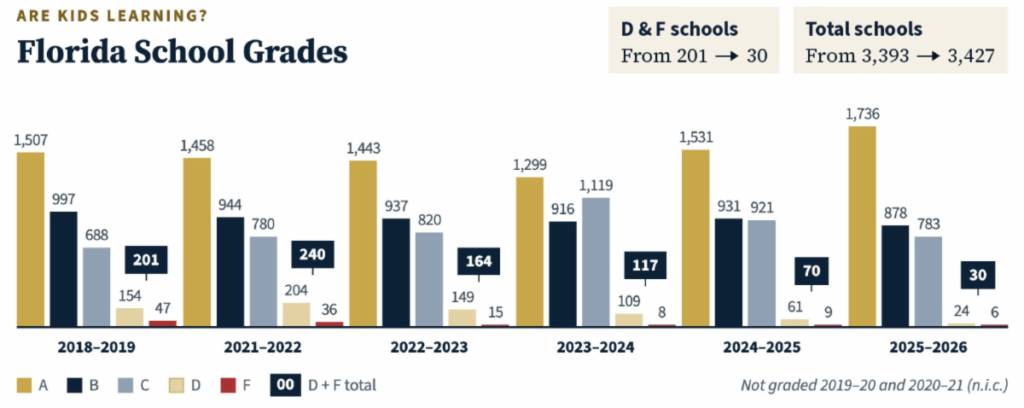
Before Covid, about 200 Florida public schools were graded D or F. This past year, it was down to 30 – out of 3,427 schools statewide. We know this because Florida tests, grades and publishes results for every public school.
Are our tax dollars invested wisely? That’s the harder question.
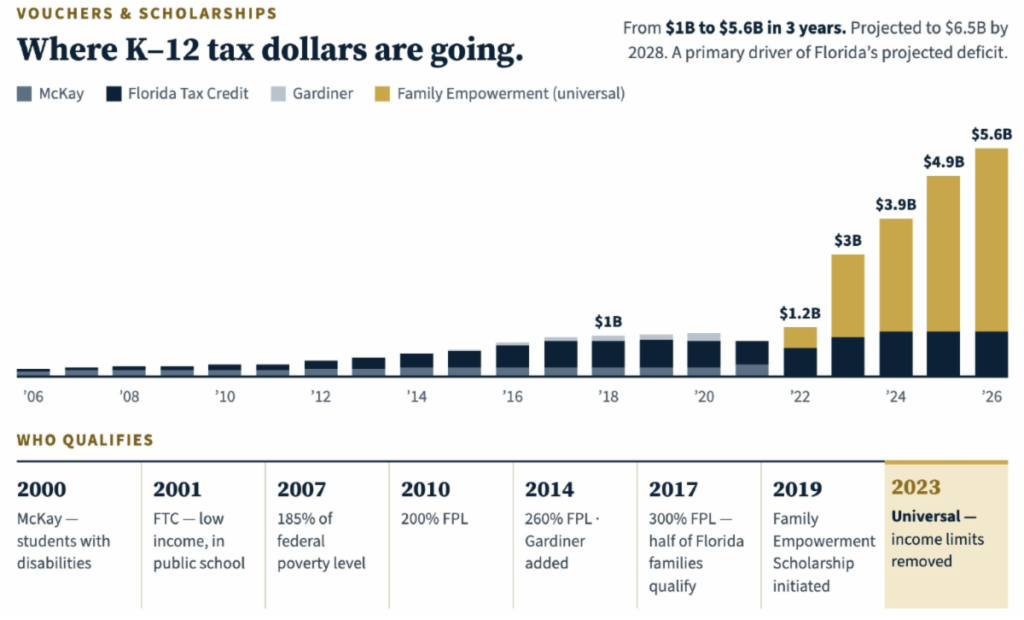
For nearly 20 years, Tallahassee has chosen to fund students below inflation impacting services, and Florida now ranks 50th in teacher pay. Meanwhile, since school vouchers became universal in 2023, voucher spending has climbed to $5.6 billion a year, without the same testing, report cards or financial scrutiny as public schools.
I support parental choice. But choice without accountability isn’t a free market. It’s a blank check without guardrails.
Plan Your Vote
• Early voting is open in many counties through Oct. 31 (some counties continue through Nov. 1). Check your county Supervisor of Elections for specific dates and locations.
• Vote by mail requests are due by 5 p.m. Thursday, Oct. 22.
• Election Day is Tuesday, Nov. 3 from 7 a.m. to 7 p.m
Candidates for governor offer different approaches on how to improve education.
EFF does not endorse candidates. But Democrat David Jolly and Republican Byron Donalds offer a clear choice on PreK–12 education. Both claim to want better outcomes for children; they differ dramatically on how to get there.
Jolly would focus on strengthening public schools: close the inflation funding gap, rebuild school facilities, pay teachers a professional wage so we have the best and brightest in our classrooms, and hold all publicly funded schooling to public standards. Donalds would continue to expand nonpublic options: portable funding, “personalized pathways” and a consumer marketplace of various providers.
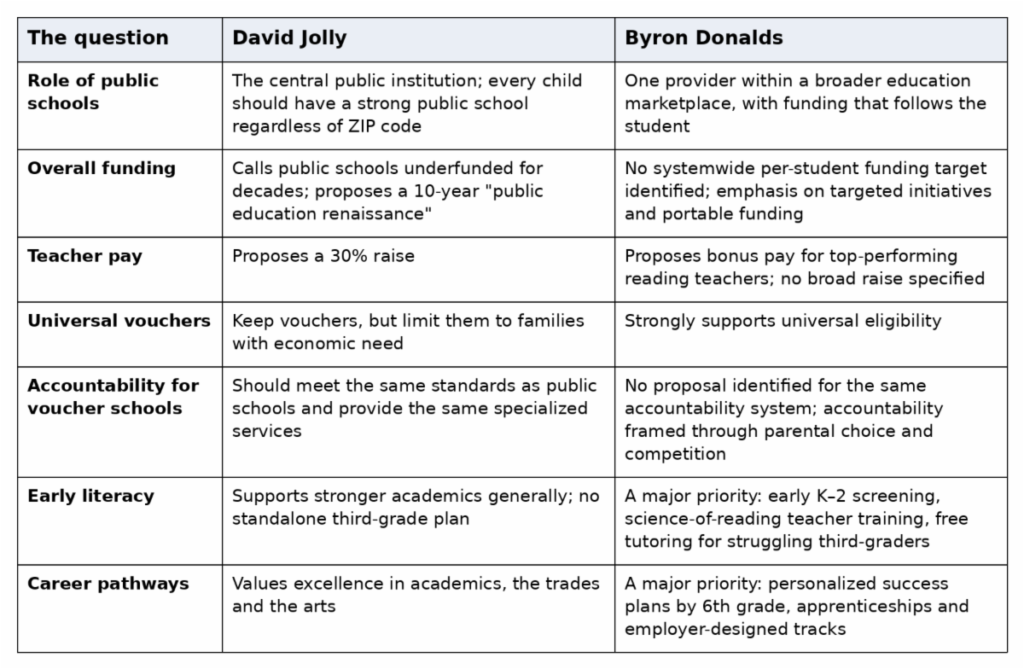
Each candidate offers ideas worth considering before casting your vote. Donalds’s reading and career plans have potential. Jolly’s funding and accountability plans speak directly to the two questions at the top of this letter. The decision in front of you is which strategy you trust with your tax dollars and with the next generation of Florida students.
Want the full detail? Dr. Sue Woltanski has compiled a side-by-side comparison of 36 education issues, drawn from each campaign’s platform and extensive news coverage of their proposals.
When voting for legislative candidates, look at the big questions.
A governor sets direction, but the legislature decides on the budget and many important policies. Before you vote, look up your state House and Senate candidates to find out:
1-Have they visited a public school in your district in the past two years?
2-Inflation has outpaced per-student funding for nearly 20 years leading to reduction in needed staff and services. Do they have a plan for dealing with this?
3-Should every school that takes taxpayer dollars meet the same standards for certified teachers, academic testing and public financial audits?
4-Florida ranks 50th in teacher pay. Knowing that teachers are the #1 impact on students learning outside of the home, how do they propose to recruit and retain good teachers in our classrooms?
5-Pre-K and early reading are proven investments. Will they support funding them at scale?
If voting for an incumbent, look at their record. Ask which bills they backed that support public schools, and which they opposed.
The bigger question.
In 1818, Thomas Jefferson wrote that education should prepare every citizen to understand “his duties to his neighbors and his country.” Florida’s own constitution calls the education of children “a fundamental value of the people.” One future keeps that commitment: excellence at scale, accountable to taxpayers. Another turns education into a consumer marketplace paid for with public money, with no common measure of whether or not children are learning.
Before you vote, ask yourself: What do you hope Florida’s schools look like in ten years? And do we still have duties to our neighbors and our country, or only to our own children?
Whatever the outcome on Nov. 3, Educating Florida’s Future will continue advocating for excellence at scale for all of Florida’s PreK–12 children.
Thank you for taking your vote seriously. Please forward this to a friend who is still deciding.
Kind regards,
Laura Hine
Executive Director
While Laura is a member of the Pinellas County School Board, these views and those expressed through Educating Florida’s Future are her own and do not represent Pinellas County Schools or the Pinellas County School Board.